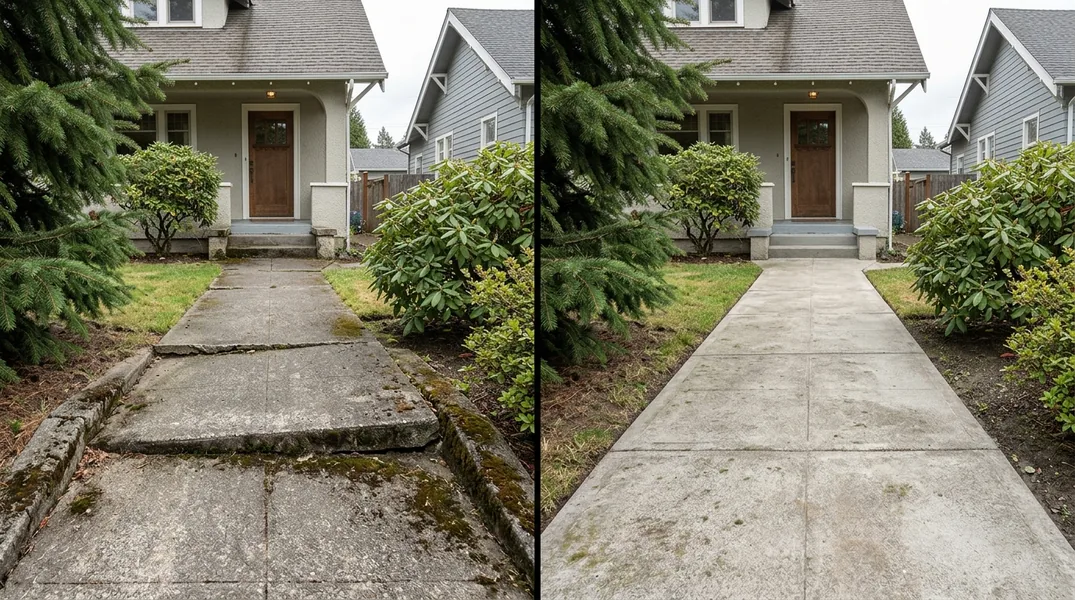
Understanding Glacial Till: The Hidden Enemy Beneath Your Driveway
Everett sits on terrain shaped by ancient glaciers, and that geological history is still affecting your concrete today. Glacial till is a dense mixture of clay, silt, sand, and rocks left behind after the last ice age. Unlike well-draining soil, glacial till compacts tightly and holds moisture like a sponge, creating conditions that are particularly harsh on concrete foundations and driveways.
When rain falls on Everett's glacial till soil, water doesn't drain away quickly. Instead, it pools around the base of your Concrete Driveways, creating hydrostatic pressure that pushes upward against the slab. Over time, this moisture infiltration weakens the concrete from below, leading to the kind of damage that catches homeowners off guard. The real problem isn't the concrete itself, it's the unstable, water-logged ground supporting it.
How Wet Winters Accelerate Concrete Settlement and Cracking
The Pacific Northwest's reputation for rain is well earned, and nowhere is that more problematic than for concrete installations. During Everett's wet winters, the ground beneath your driveway becomes saturated. Glacial till soil expands when wet and contracts when dry, causing the foundation to shift and settle unevenly. This constant movement puts tremendous stress on concrete, which is rigid and brittle. Unlike flexible materials, concrete cannot bend with the ground, so it cracks.
Freeze-thaw cycles make the problem worse. When water trapped in the soil freezes, it expands with tremendous force, pushing the concrete upward in a process called heave. When it thaws, the ground settles back down, but not always evenly. Your driveway may develop spider-web cracks, sunken sections, or raised edges. If you've noticed your driveway looking uneven or cracked after a particularly wet winter, glacial till settlement is likely the culprit. The damage often starts small but grows worse with each freeze-thaw cycle, making early detection and repair essential.
Hardpan and Drainage: Why Your Concrete Slab Keeps Failing
Beneath the glacial till in many parts of Everett lies a layer of extremely dense, compacted soil called hardpan. Hardpan acts like a concrete barrier itself, preventing water from draining downward. When your driveway is installed over hardpan with poor drainage planning, water has nowhere to go. It accumulates under the slab, creating a reservoir of moisture that weakens the concrete base and accelerates deterioration.
Many older driveways in the region were installed without proper sub-base drainage systems. Without a gravel base layer, perforated drain pipes, or slope for runoff, water sits under the concrete indefinitely. This is why you might see new cracks appearing year after year, even in driveways that seemed solid just a few seasons ago. The ground beneath is literally moving and shifting as water levels fluctuate with the seasons. Proper drainage design is not optional in Everett, it's essential for concrete longevity.
Signs Your Driveway Is Suffering from Glacial Till Damage
If you live in Everett, knowing what to look for can help you catch concrete problems before they become expensive. Early warning signs include small cracks that seem to grow wider each year, uneven sections where one part of the driveway is higher than an adjacent section, and areas where water pools after rain. You might also notice that cracks follow patterns, such as running parallel to the edges of the slab, which is typical of settlement-related stress.
Another telltale sign is spalling, where the concrete surface flakes or breaks apart in small chunks. This happens when water freezes inside the concrete pores. If you see white, powdery deposits on the concrete surface, that's efflorescence, a sign that water is moving through the concrete and carrying minerals to the surface. None of these issues will improve on their own. They all indicate that your driveway is being damaged by moisture and ground movement, and the longer you wait, the more expensive Concrete Repair & Resurfacing will become.
Protecting Your Concrete: Prevention and Repair Solutions
The best defense against glacial till damage is prevention during installation. New driveways should include a proper sub-base with at least four inches of compacted gravel, a layer of sand for leveling, and ideally a perforated drain pipe to direct water away from the slab. The driveway should also be sloped slightly, typically one-eighth inch per foot, to encourage water runoff. When these elements are included, concrete can resist the effects of Everett's wet climate for decades.
If your driveway is already damaged, Concrete Repair & Resurfacing may be the solution. Minor cracks can sometimes be sealed to prevent water infiltration. Sunken sections might be lifted using a process called mudjacking or polyurethane injection, which raises the concrete back to its original level. In some cases, if the damage is extensive or the ground beneath is severely compromised, replacement is the most cost-effective long-term option. Everett Concrete Pros can evaluate your specific situation and recommend the best approach for your property.
When to Call a Professional: Getting Help Near You
Attempting to repair concrete damage caused by glacial till and poor drainage without professional expertise often leads to temporary fixes that fail within a year or two. The root cause, inadequate drainage or unstable ground, remains unaddressed. That's why it's important to work with contractors who understand Everett's unique soil conditions and climate challenges. A professional assessment can identify whether you're dealing with simple surface cracking or deeper structural issues related to ground settlement.
If you've noticed cracks, uneven sections, or water pooling on your driveway, don't wait for the problem to worsen. Contact Everett Concrete Pros today at (425) 551-7377 or request a free estimate online. Our team has extensive experience working with glacial till soil and understands the specific challenges facing homeowners in this region. We'll assess the damage, explain your options, and provide a clear plan to restore your driveway to safe, functional condition. Whether you need repair, resurfacing, or a new installation with proper drainage, we're here to help.
Looking for a professional concrete contractor in Everett? Everett Concrete Pros responds fast for all your concrete needs.
Get a Free QuoteOur services: Concrete Driveways · Concrete Patios · Stamped & Decorative Concrete